Lithia & Driveway
Annual Planning Software
In this case study, we’ll cover the evolution of an internal application from a humble MVP to a working model for how we would ultimately execute iterative improvement within the organization.
Contributions
- User Research
- Journey Mapping
- Strategy
- Concepting
- UX Design
- Systems Design
- UI Design
- Design Specs
- Progress Measurement
Legacy Experience
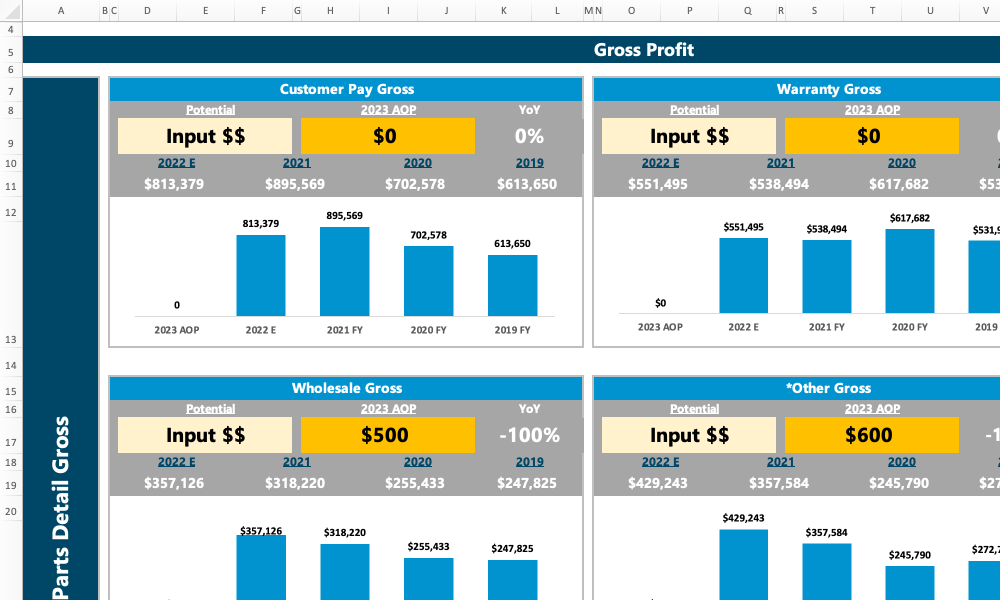
Users used to submit their seasonalized forecasts for the year via Excel. Complex workbooks were distributed throughout the organization, teams organized around planning once every 12 months organically, then submitted their estimates for review via email. These output of this exercise determined team accountability and influenced how strategic decisions were made.
In-Flight MVP Experience
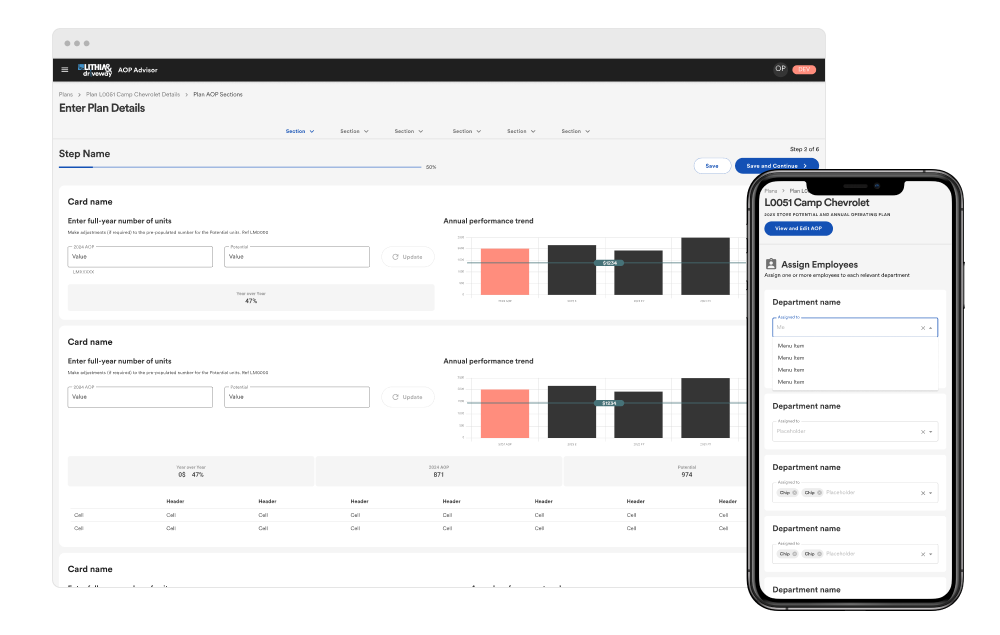
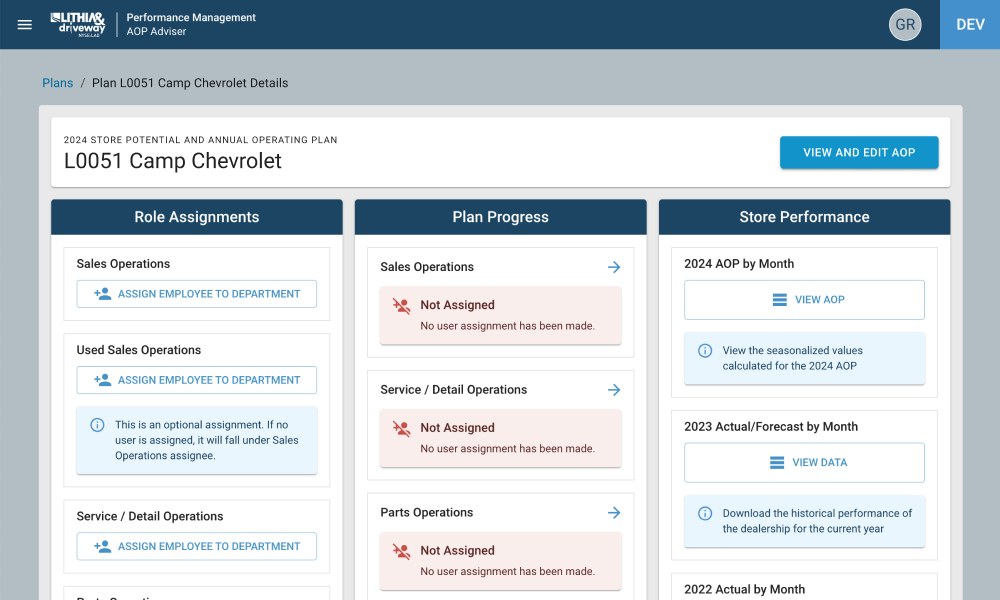
Upon joining the team, I found a modernization effort nearing completion. The app would replace the familiar yet manual workbook solution with an interface that would save them time while driving greater accuracy in forecasts. Design was limited to 1 sprint and was less than ideal.
Post-Launch User Research
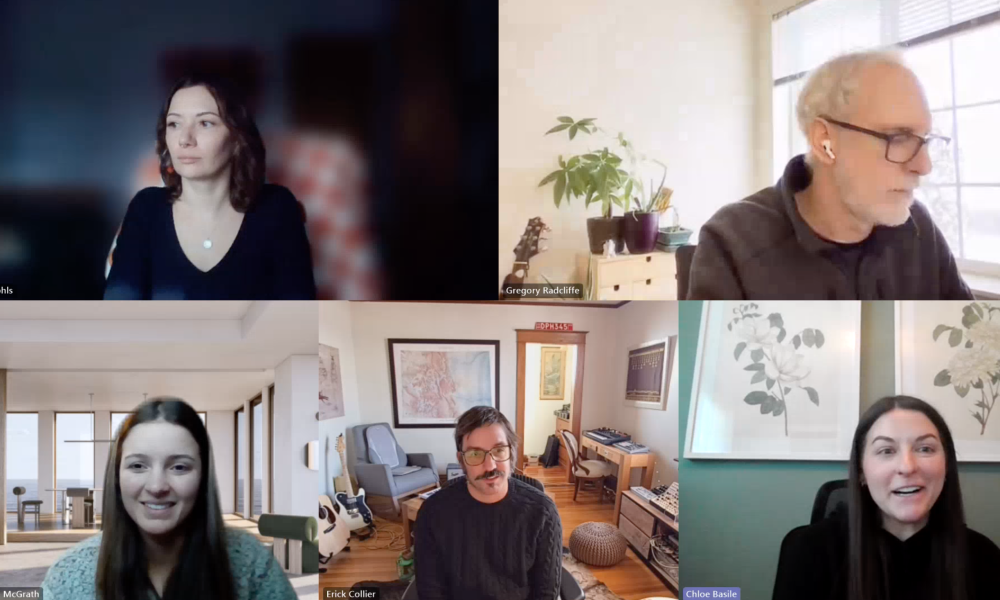
We spun up a research initiative targeting a cross section of users to understand how it was received, gauge general sentiment, identify pain points and workarounds, and determine where we could focus energy to further improve outcomes.
Synthesis
Upon synthesis of the findings we learned that the experience was seen as a significant step up over the legacy workbooks but found opportunity for improvement. We leveraged AI to help synthesize our notes into actionable recommendations and affinity mapped takeaways to develop themes.
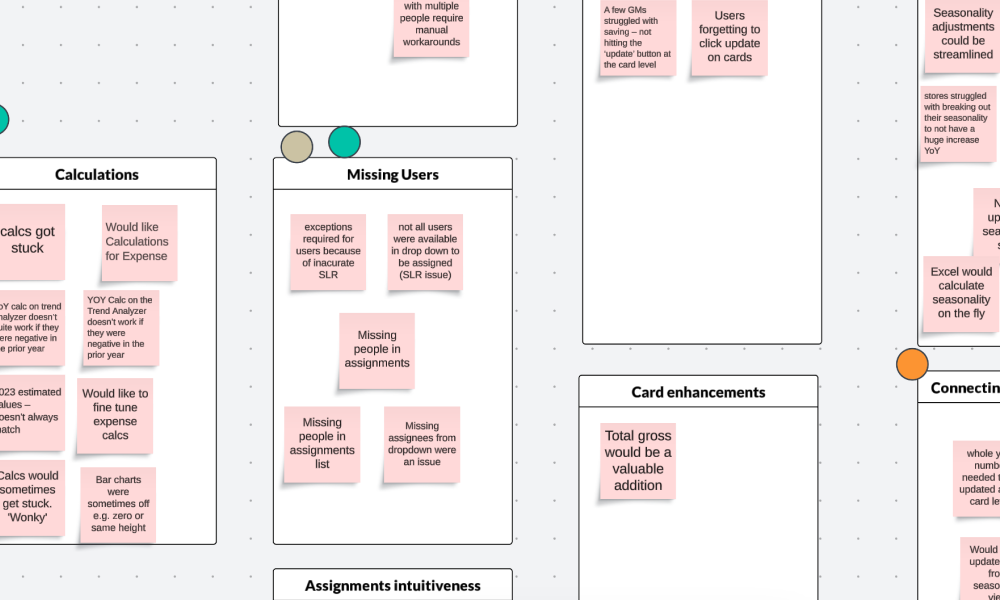
Recommendations
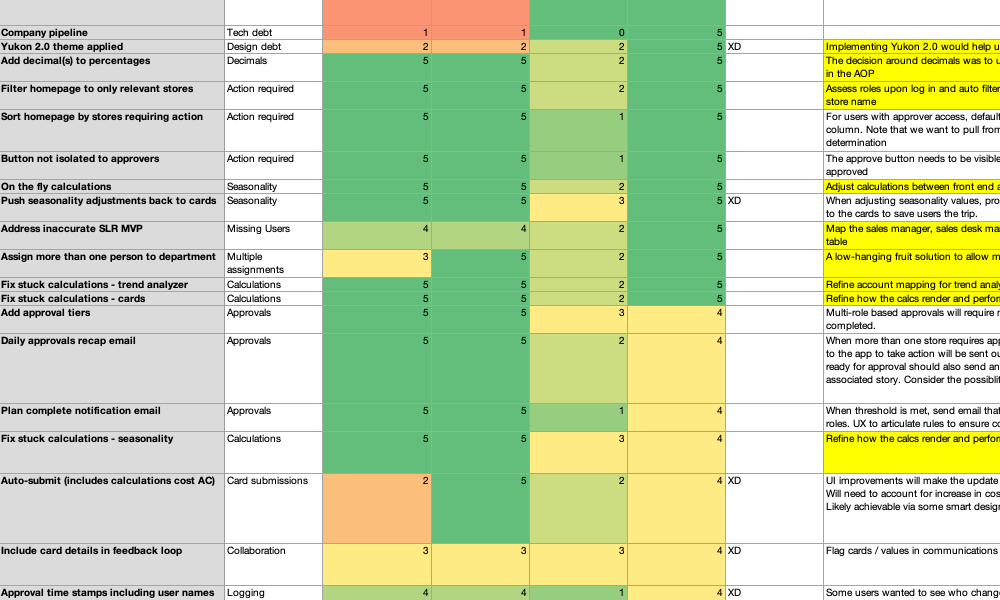
We enriched the list of takeaways with metadata including value to user and business, frequency, severity, dependencies, and level of effort. They were ranked in priority tiers 1-5 and presented to the business along with SWAGs. These would inform our iteration up to the next planning cycle.
Applying Design System
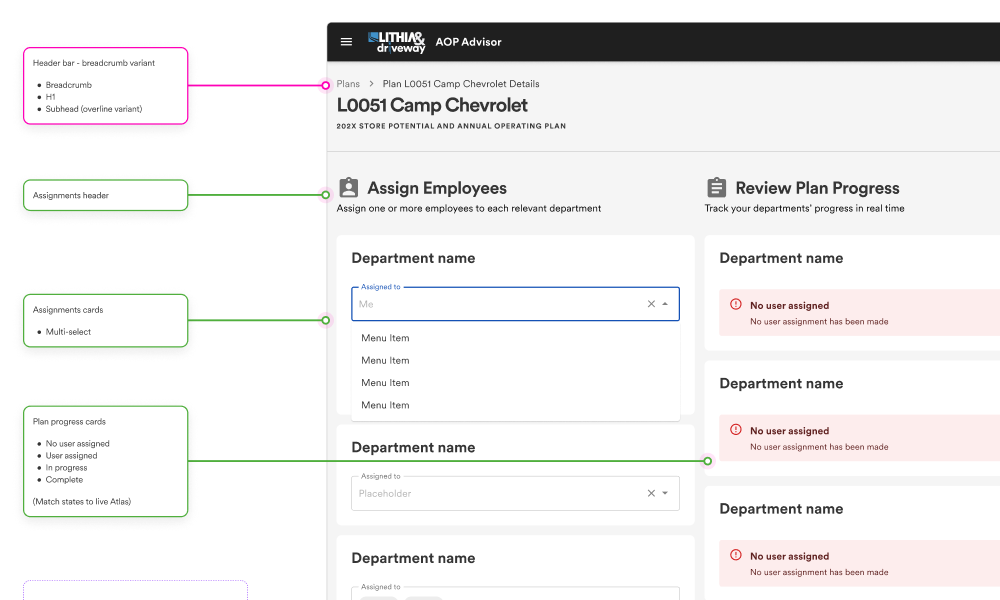
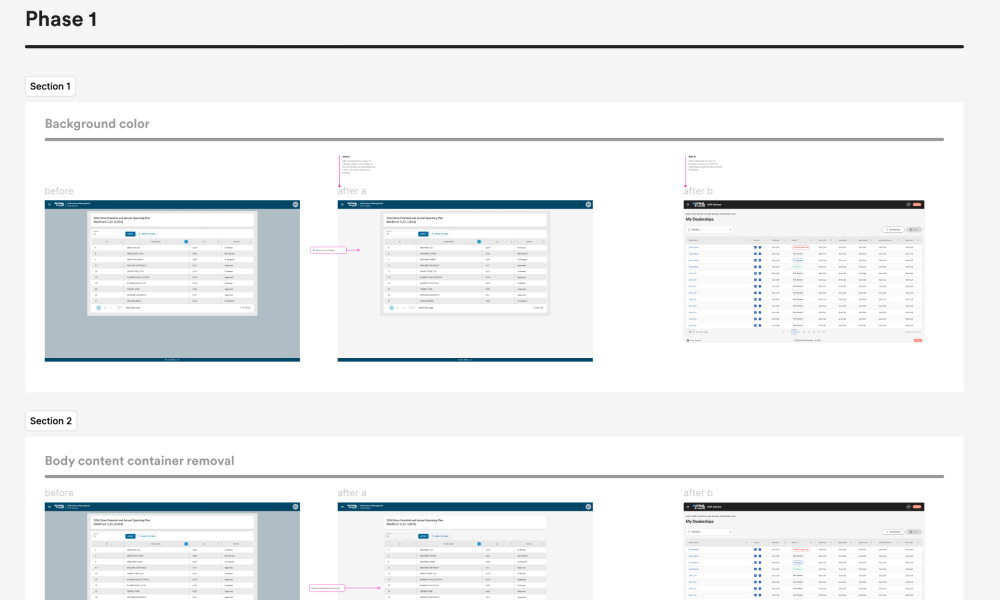
As part of the effort to address design and technical debt, we sought to implement a significant design system update. We established a current state source of truth Figma artifact to act as a foundation for Feature design to keep the work separated for later engineering story generation.
Feature Design
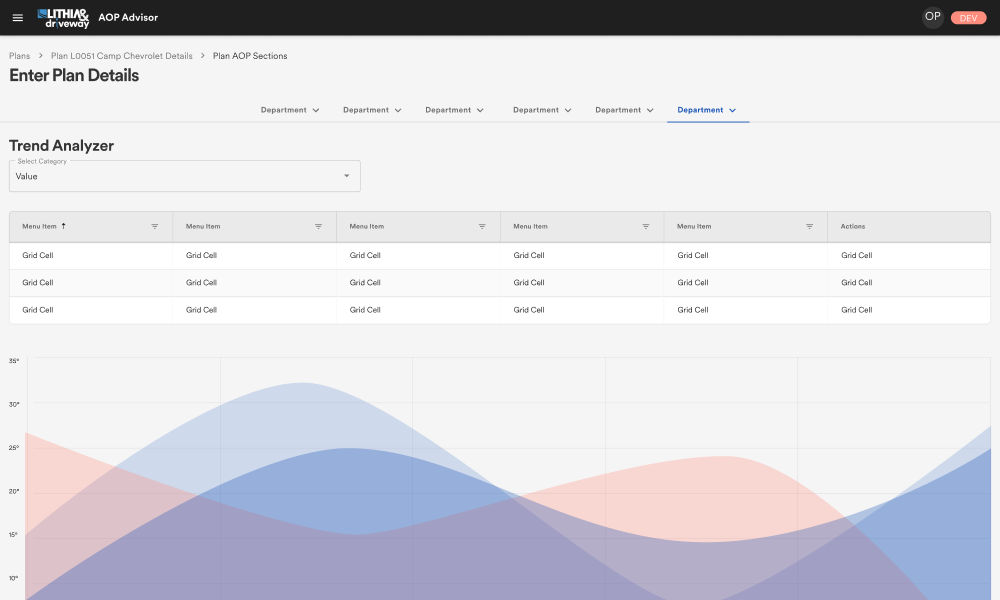
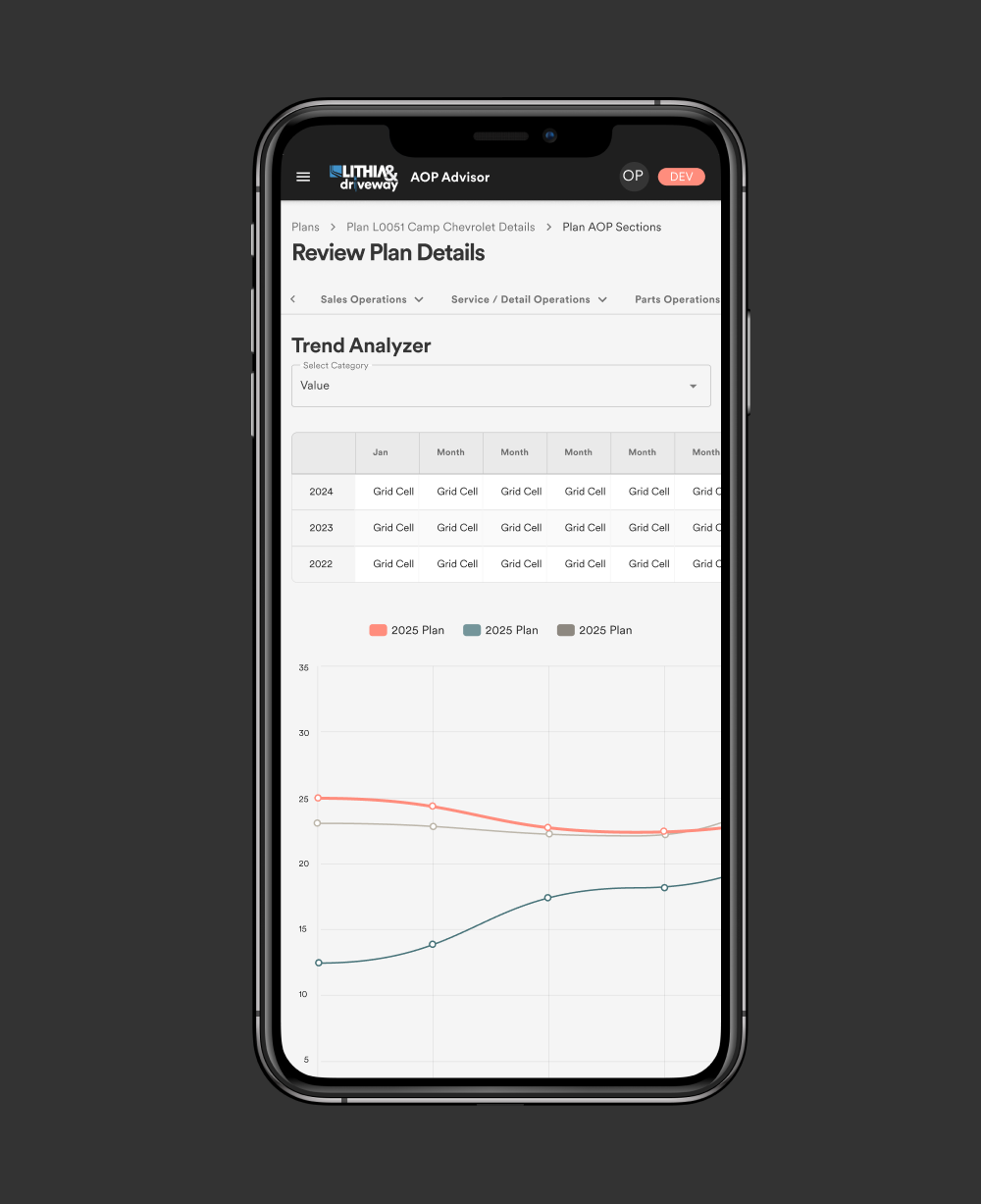
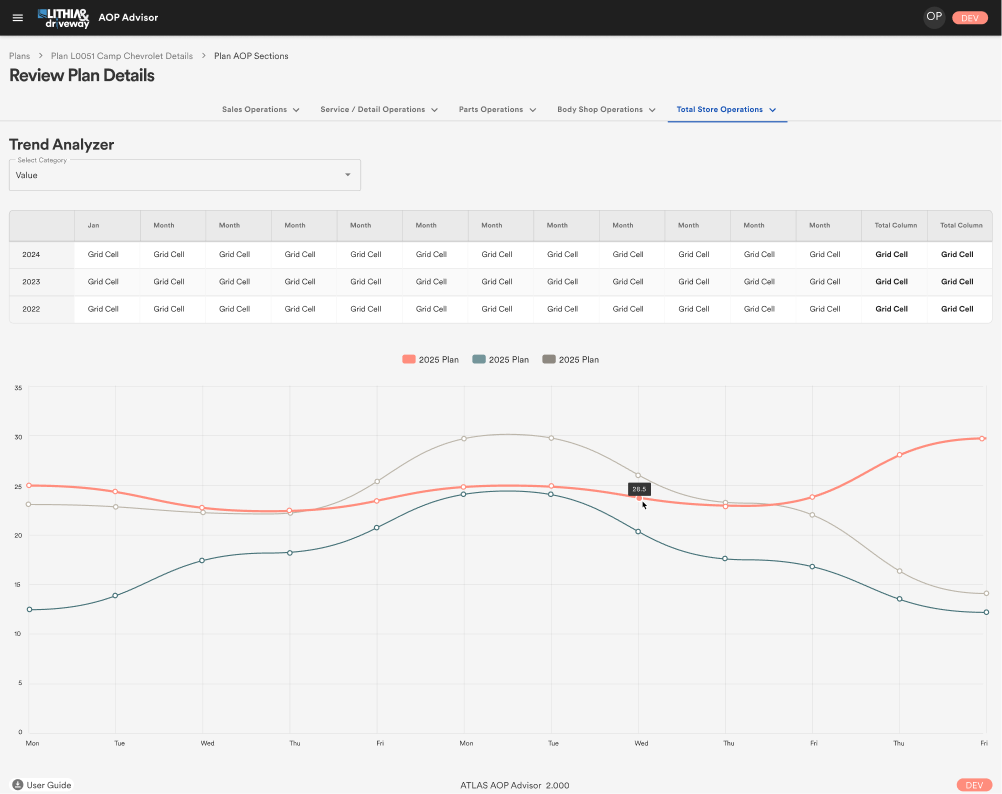
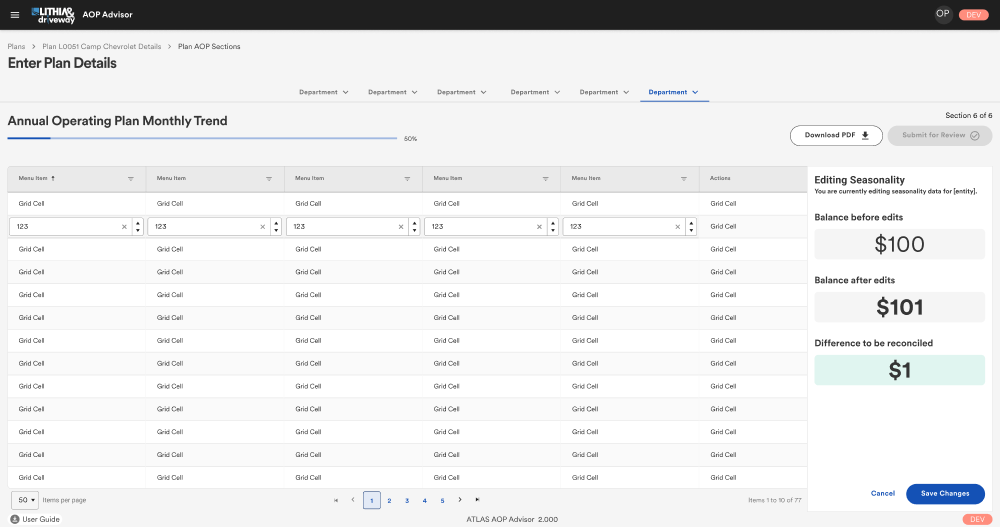
We layered feature design solutions atop the design system foundation to illustrate the granular improvements we’d be looking to tackle within a time-boxed period of time. We included two quarters of future features into our thinking with the intention of lightly future-proofing the solutions and to be able to share with stakeholders the short and medium term improvements.
An Agile Approach
Design developed a position of iteration sequence to ensure that the integrity of the experience was at the forefront should the scope be dialed back due to any unforseen environmental factors.
Release
We released the updated interface with great confidence given the strong foundation of research and validation. The improved capabilities, refined features, addressed bugs, new look and feel, and quality of life improvements were received positively across the organization. We repeated much of this approach moving forward given the mitigation of risk, clear expectations, enhanced flexibility, and improved velocity measured along the way.
Iteration
Satisfaction scores gauged through subsequent testing further improved over prior year from 2 to 4.5 out of 5. Light followup user interviews confirmed our assumptions in the improvements to date as well as the prioritized list of remaining feature enhancements. It also informed where minor re-prioritization was required as perceptions and needs evolved.