Lithia & Driveway
Internal AI Application
In this case study, we’ll walk through the design of a new internal application from inception through launch and iteration. We’ll cover the research behind it, the formulation of a design and product strategy, how we measured its success, and what iteration looked like post launch.
Contributions
- User Research
- Persona Development
- Strategy
- Concepting
- UX Design
- Systems Design
- UI Design
- Design Specs
- Usability Assessment
- Progress Measures
- Design Iteration
Hackathon Concept
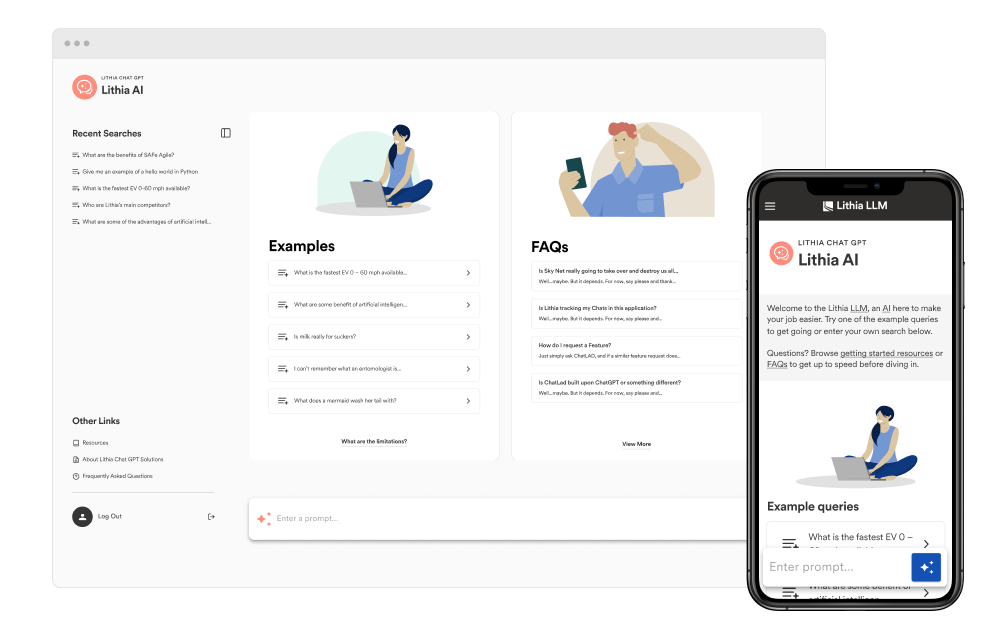
During a hackathon project over just one sprint, engineers created a proof of concept of ChatGPT running securely within our network loaded with test data. The organization decided to pursue it and Design was brought in to elevate the tech demo into something that would provide value to users within the organization.
Problem Statement
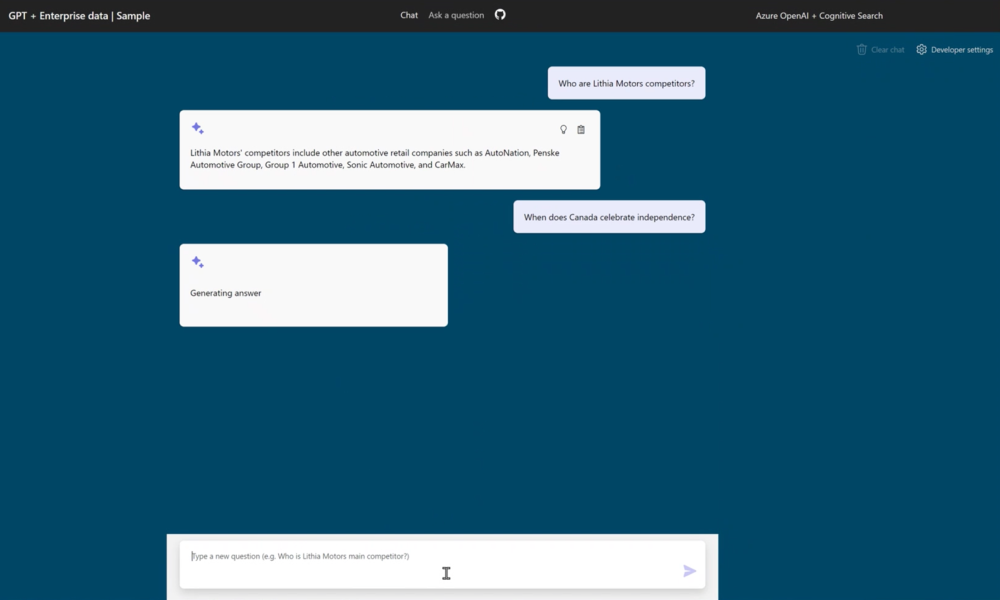
Design’s first step was to define the problem “If we do a great job creating an internal AI experience, we may improve our employee’s lives by providing an assistant that might allow them to do their jobs more efficiently and securely.” That kernel of an idea would result in a hugely valuable service that would continue to evolve over the coming quarters.

Workshops
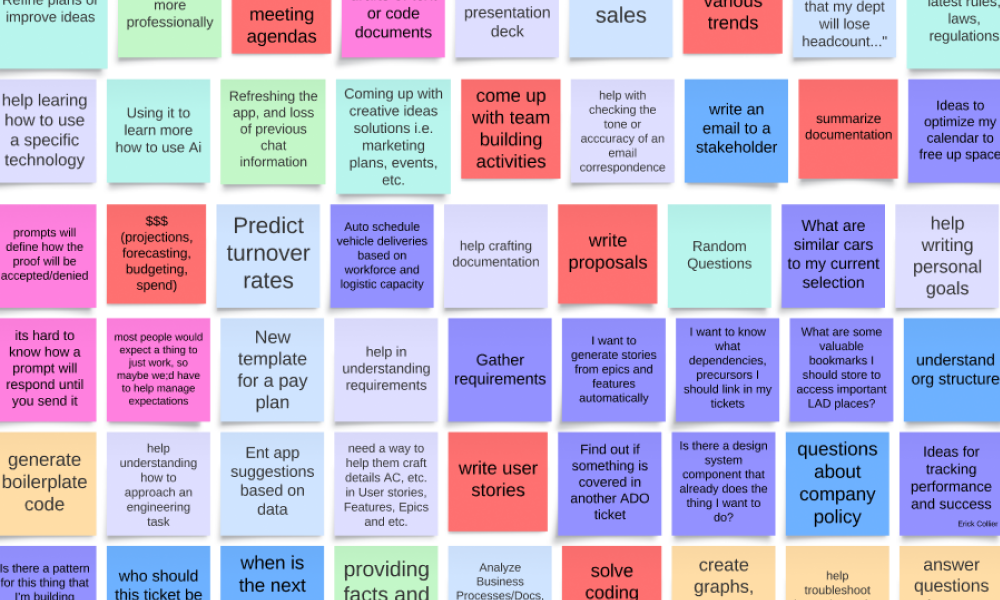
We conducted workshops within the organization to ascertain who might benefit from having access to AI with company data at their fingertips. We assessed the problem by job role, time within the organization, discipline, region, rank, and more. We synthesized the results and identified a number of segment candidates to pursue.
Proto-Personas
Following initial discovery, we were able to assemble a number of proto-personas which we initially populated with the help of the AI POC itself. This helped us move rapidly but at risk as we outlined potential goals, needs, and motivations. With an outline in place, we proceeded to turn these low-confidence assumptions into high-confidence maps.

User Research
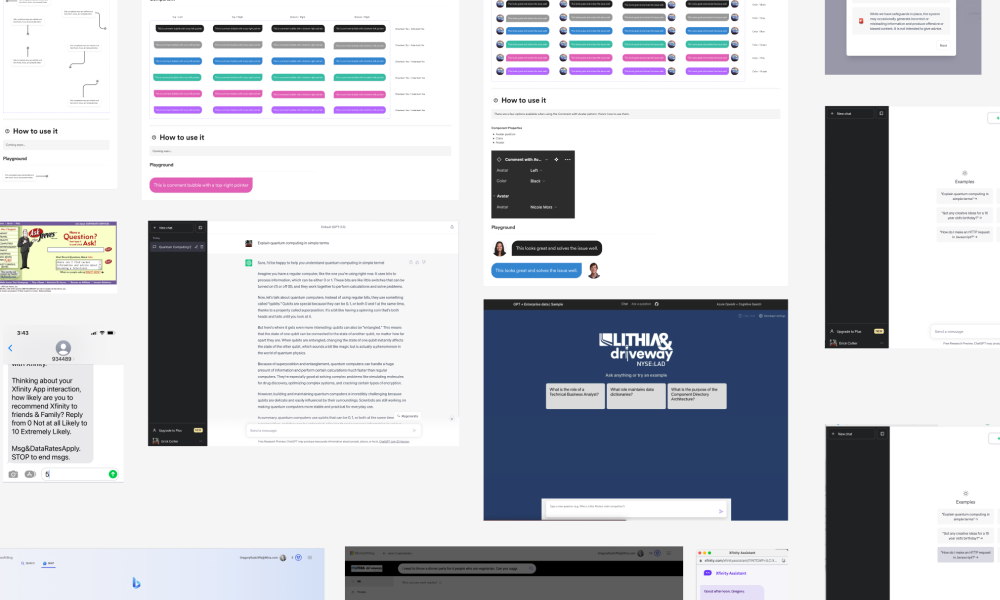
We looked to gain an understanding of not only snapshots in time of the current AI experiences available, but also adjacent experiences such as search, chat, messages, team utilities, knowledge repositories, wikis, etc. We assembled them in figma and discussed characteristics, benefits, and more before beginning any design work.

Visual & Market Research
Following research and synthesis, we found that we had a number of potential features we could explore to help these users. We loaded each into a matrix where we could sort by which personas each would benefit, the level of difficulty, the availability of data, known dependencies, and assigned each a priority score.
Concepts
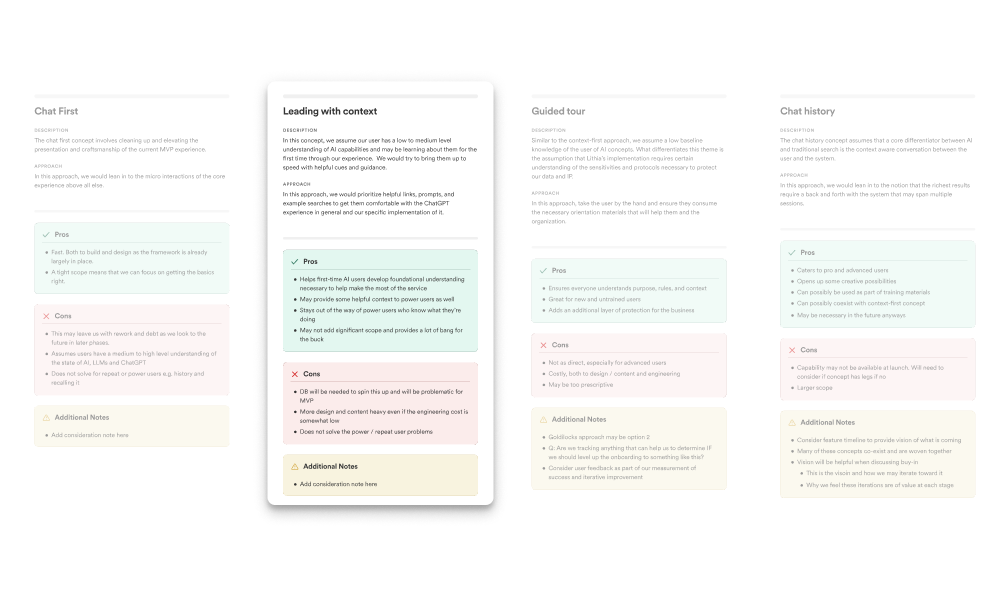
We then set out to visually explore numerous concepts in ascending levels of complexity that the team reviewed as part of an effort to understand where we felt we had to draw our MVP line. We landed on a modest approach focused on the assumption that many users would have medium to low experience with AI tools and could phase in more complex interactions over time.
Low Fidelity Design
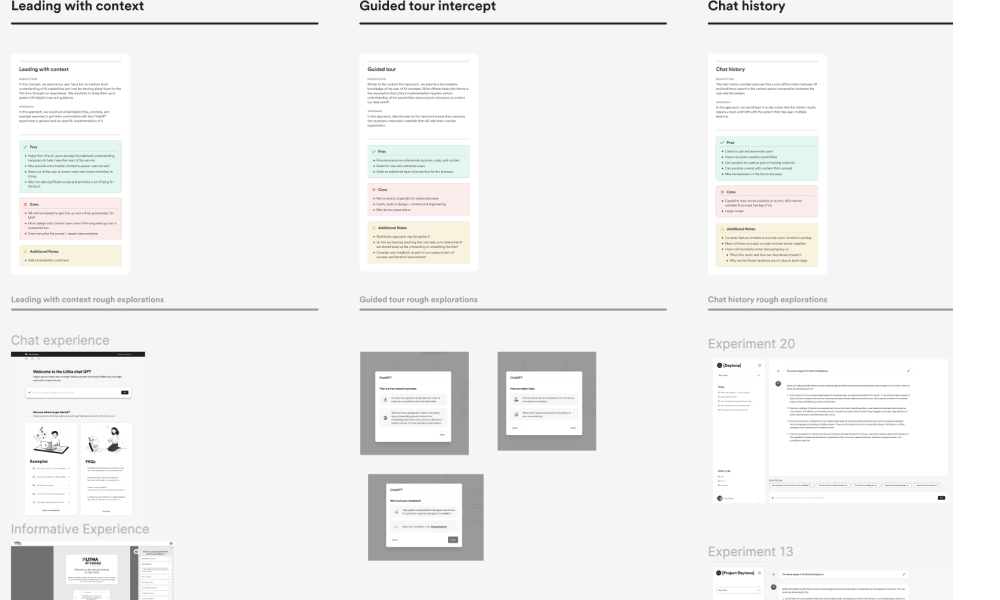
We rapidly designed many interface options that would solve for our selected concept which assumed our users would require some level of in-app assistance to utilize the solution it to its potential. We explored options that would optimize the onboarding experience while making clear the benefits of our App vs native ChatGPT or other available resource.
UI Design
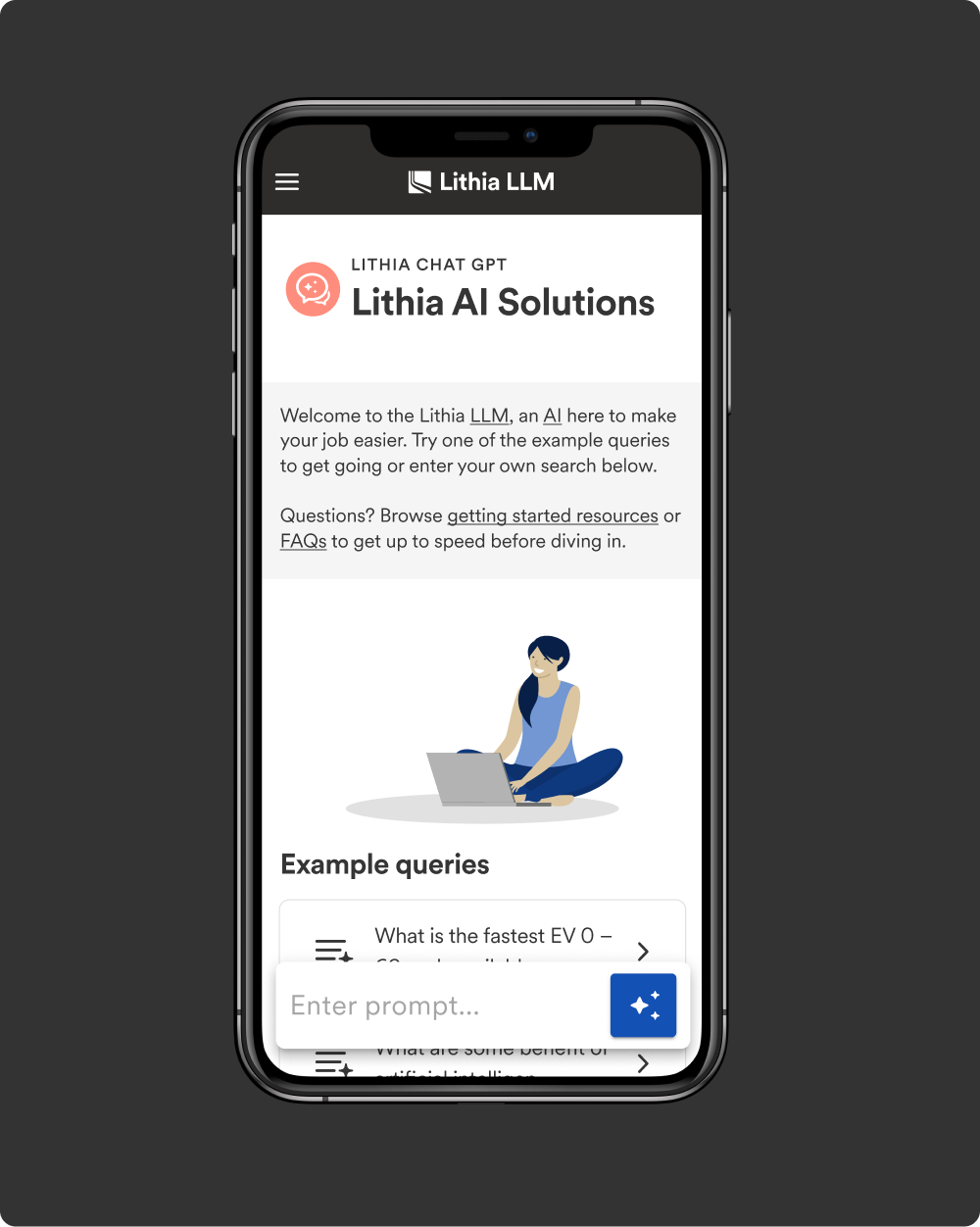
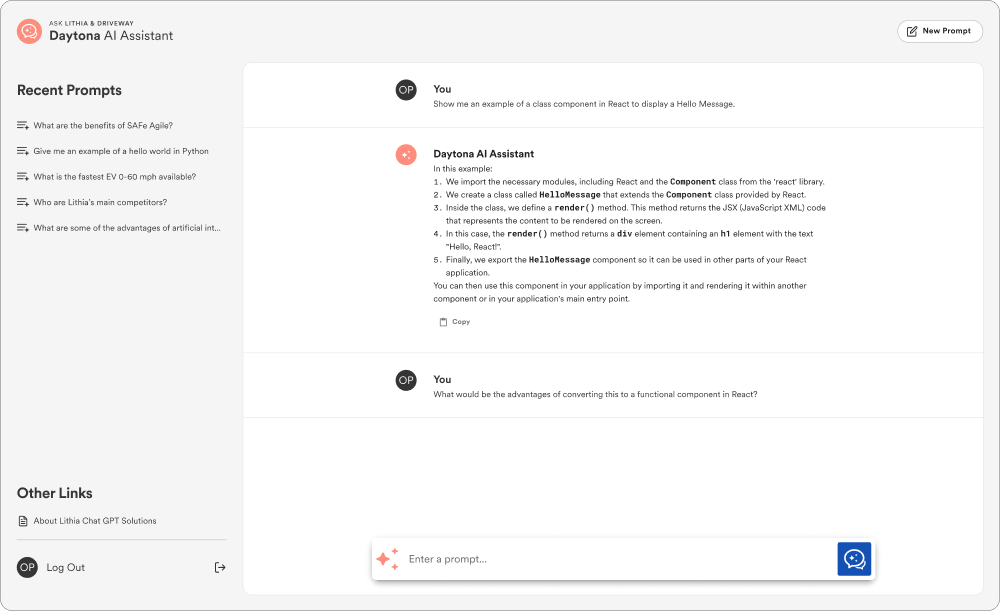
Once the team agreed on the scope, we began mocking up high fidelity screens that captured the spirit of our concept. We leveraged illustration and tone from our customer-centric experiences in an attempt to lower the barrier to entry for our less tech-savvy audience. We designed mobile, tablet, and desktop initial phase screens as well as phase 2 features to mitigate the need for design refactoring in the near future. This also helped set expectations with stakeholders on what’s now, what’s soon, and what’s later.

Release
We released the solution in beta to our core persona and some adjacent participants to establish a baseline understanding of adoption and usage. We put out a signup form to request access to understand which departments we might expand to next. We measured things like number of responses copied, number of follow-up prompts, repeat usage, and satisfaction survey responses.
Learn
We learned that users did indeed find value in a simple implementation of an internal AI tool without the security risks of native tools. We also found that the department-specific data loaded for our initial persona proved to be a huge time saver and led to a surge of access requests from other departments. On the flip side, we learned that the help documentation provided was not widely utilized and that we would not have to invest in the creation of more to help with onboarding. The search itself was enough to get folks up and running.
Iterate
From the hackathon proof of concept to initial release, we spent about four 2-week sprints. The MVP helped us make minor course corrections in strategy and prioritize the expansion to additional departments. We began utilizing the tool itself to build proto personas that we would confirm through subsequent research. We expanded from our product org to our dealership network layering in additional capabilities to bring us to parity with ChatGPT and expanded data sources and integrations.